
Presenter Profile
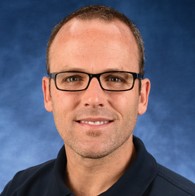
Steven C. Rogers, MD, MS
Medical Director - Emergency Behavioral Health Services Connecticut Children's
Medical Director - Connecticut Children's Youth Suicide Prevention Center
Research Scientist- Connecticut Children's Injury Prevention Center
Associate Professor- University of Connecticut School of Medicine
scrogers@connecticutchildrens.org
Steven Rogers, MD, MS, is the Medical Director of Emergency Behavioral Health Services and Medical Director of the Youth Suicide Prevention Center at Connecticut Children's. Dr. Rogers is an affiliated Research Scientist at the Connecticut Children's Injury Prevention Center. He is also an Associate Professor at the University of Connecticut School of Medicine. Dr. Rogers is the President of the Connecticut Chapter of the American Academy of Pediatrics. His current research, academic and advocacy efforts focus on youth suicide prevention. He established a suicide screening program in 2019 and has screened over 100,000 youth. Over the life of the program, staff compliance rates are 90% and a positive screen rate of 18%. Over the past 5 years, he has also shared his success and expertise in suicide screening at many levels including monthly presentations at individual pediatric primary care offices to assist in planning/development of universal screening for those practices. He has also provided expert testimony at regional/state meetings advocating for universal screening of youth. He has been invited to multiple national collaboratives/educational programs by the American Academy of Pediatrics (AAP), American Foundation for Suicide Prevention (AFSP), Emergency Medical Services for Children Improvement Center, and American Association for Suicidology (AAS). He was recently awarded the AAS 2023 Roger J. Tierney Award for applied contributions to the field of suicidology.
Presentations
Identifying the Invisible Wound: Developing A Mental Health Screening Program for Pediatric Trauma Patients as Required by the American College of Surgeons
Kristen Volz-Spessard, MS
Jennifer Tabak, RN, MSN, CEN, CPEN
Susanne Clark, LCSW
Brendan T. Campbell, MD MPH, FACS
Steven C. Rogers, MD, MS
The American College of Surgeons (ACS) requires that all Level 1 Trauma Centers screen patients who may be at-risk for mental health problems. This is based on reports that trauma patients one-year post-injury often develop Post-Traumatic Stress Disorder (PTSD) (21%) and depression (6%). Therefore, screening is critical to ensure patients are identified and receive appropriate resources to limit or prevent the impacts of traumatic injury on youth mental health. The Acute Stress Checklist – 6 (ASC-6) is a validated brief screening tool that measures acute traumatic stress reactions/disorders in children and adolescents. This tool can be completed in less than 2 minutes and can be easily completed by a social worker or psychologist. Our free-standing Children’s hospital is a designated Level 1 Pediatric Trauma Center that evaluates and treats more than 60,000 patients each year. To address the recent ACS requirement and improve engagement in mental healthcare for trauma patients we developed a screening program incorporating the ASC-6 to screen eligible patients including a quality review process. The screening program was established in February of 2026. This program evaluation aims to describe the preliminary results of those screened to date using the ASC-6.
Patients eligible for screening are 8 to 25 years old, mentally capable and medically stable, admitted to Trauma Service (>24 hours), and experienced an acute injury or trauma with a Trauma Team activation. Patients’ answers are based on a numerical assigned response of “Never/Not true = 0”, “Sometimes/Somewhat = 1”, or “Often/Very True= 2.” Patients who screened positive on the ASC-6 with a score of 6 or higher are referred to psychiatry for an additional mental health evaluation. ASC-6 screening results and demographic information were analyzed using Microsoft Excel. Additional screening data will be analyzed using appropriate statistical analysis (i.e. chi square) to describe/report significant demographic and screening result associations.
Between February 2026 and May 2026 there were 24 patients who were admitted to the Trauma Service. There were 23 patients eligible to be screened with the ASC-6, and 1 patient who was not mentally competent. Of the 23 patients, there were 5 positive screens (22%) and 18 negative screens (78%). All screened were mostly 17 years old, were male (70%), identified as White (74%), and Medicaid insured (48%). Positive screens were mostly 15 years old, were male (60%), identified as White (60%), and Medicaid insured (60%). By November 2026, we expect to analyze and report on the screening results of over 60 patients admitted to the Trauma Service.
Therefore, by incorporating a mental health screening program into patient care, this enables Trauma Centers to identify patients who may be at-risk for mental health concerns and connect those with positive screens to appropriate resources which may reduce suffering from mental health disorders and/or risk of suicide following a significant traumatic injury
1. Understand the importance of screening/identifying trauma patients for mental health concerns
2. Describe statistically significant associations for screening results and patient demographics to help inform quality improvement efforts
3. Improve engagement in mental healthcare for trauma patients in need
Check In with your Mental Health and Connecticut Children’s Youth Suicide Prevention Center!
Kristen Volz-Spessard, MS
Steven C. Rogers, MD, MS
Check In is a mental health wellness single day program lasting from two to four hours that takes place at schools, workplaces, and in the community. Check In is an adapted version of Fresh Check Day that engages participants in conversations that improves mental health awareness and reduces stigma through educational and interactive activities in a festive atmosphere. Connecticut Children’s Youth Suicide Prevention Center (YSPC) Fresh Check Day, originally created by the Jordan Porco Foundation, is an evidence-informed mental health promotion and suicide prevention program for college aged students. Fresh Check Day is also listed as a Best Practice in the Suicide Prevention Resource Center. The Connecticut Children’s YSPC team will be presenting on the structure, design, and impact of the Fresh Check Day and Check In programs, followed by an immersive modified experience of the Check In program tailored for the conference attendees. We will share the methods and approaches to applying Check In in either a “lunch and learn” model or singular event model within school, work, and community environments.
Join Connecticut Children’s YSPC for an immersive mental health fair, Check In. Check In incorporates mental health messaging with engaging activities in a festive environment. It aims to reduce stigma and connect participants to resources. Learn how to apply Check In to any environment and check in on your mental health through this interactive presentation.
Content Outline: The YSPC will further describe the programs, Fresh Check Day and Check In, suicide prevention programs that combine simple mental health messaging with engaging activities, working to reduce isolation and stigma and normalize conversations around mental health. This presentation will include a description of the programs, data about the impact of the programs, and the two frameworks in which the Check In program can be adapted: a lunch and learn framework, and a single event fair-like framework. The YSPC will then demonstrate an immersive modified version of Check In with conference attendees. Attendees will engage in several of Check In’s booths and participate in the activities. The YSPC will then conclude with a presentation on how to adapt Check In to any environment, and the impact of incorporating Check In to their existing wellness and prevention programs.
1. Understand how the Fresh Check Day and Check In programs reduces stigma and fosters help-seeking behaviors through effective mental health messaging
2. Learn how to apply the Check In program, with adaptable frameworks, to any school, community space, or workplace environment
3. Check in on their own mental health through a modified immersive Check In program